Japanese man's 60 days in Cambodia ended in fraud, abandonment and arrest
https://mainichi.jp/english/articles/20260622/p2a/00m/0na/018000c?dicbo=v2-JZSM7zN
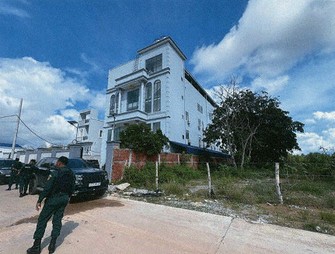
TOKYO -- Lured by social media posts and job advertisements promising "high income" and "same-day pay," a steady stream of people in Japan continue to travel overseas to engage in fraud cases. A Mainichi Shimbun report about a Japanese man who got involved in such crimes reveals the grim reality behind these so-called "shady jobs," which exploit people's naivety.
About a year ago, a 46-year-old Japanese man rushed into the Japanese Embassy in Cambodia. "They took my passport. I want to go back to Japan," he said.
He was a "caller" who was thrown out of a crime group after getting involved in a bank transfer fraud case. Although he managed to return to Japan, he was arrested upon arrival.
The woman he deceived was about the same age as his mother. She was 72 at the time and lived in Saitama Prefecture, with savings of a little more than 20 million yen (around $120,500).
In late March 2025, her phone rang.
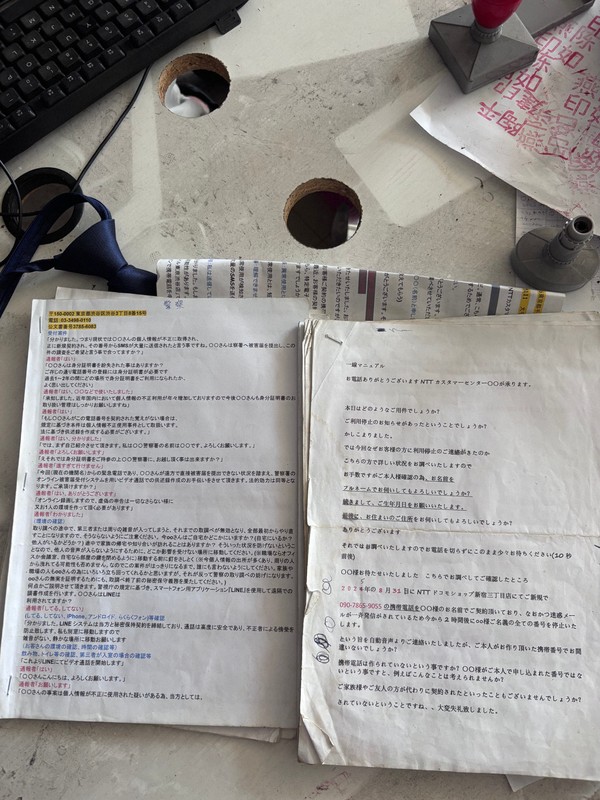
"This is the customer service center," the caller said, adding, "There is a possibility that a mobile phone has been fraudulently contracted under your name." The calls continued for 18 days, then the caller changed to "Yamanashi Prefectural Police," saying, "We are investigating your involvement in a money laundering case."
After panicking, the woman went to a post office and transferred money to the designated account, losing almost all her savings. It was 20.5 million yen (around $150,600), money she had set aside for her old age and after her death.
The man who fled to the embassy was one of those who called her.
Plunging deeper and deeper into a life of crime
After graduating from high school, he drifted between part-time jobs including work at restaurants before ending up in a line of work that made money by deceiving people. He was later charged with fraud and stood trial. Asked about his motive, he said, "I wanted money."
That reason, too, stemmed from crime. In March 2025, a court ordered him to pay a fine of 200,000 yen (about $1,200) in another case, but he was already in debt. When he contacted an acquaintance to try to raise the money, he was told, "There's work making phone calls in Cambodia." He thought it was one of the illicit overseas jobs he had heard about in the news.
"I knew it was bad work." But earning money took priority. He obtained a passport. Someone he had been in touch with on social media sent him 350,000 yen (about $2,200), and he used it to pay the fine.
That was how he plunged further into crime. In late March, he left his home in Tokyo and headed to Cambodia. The work was, as he had suspected, fraud.
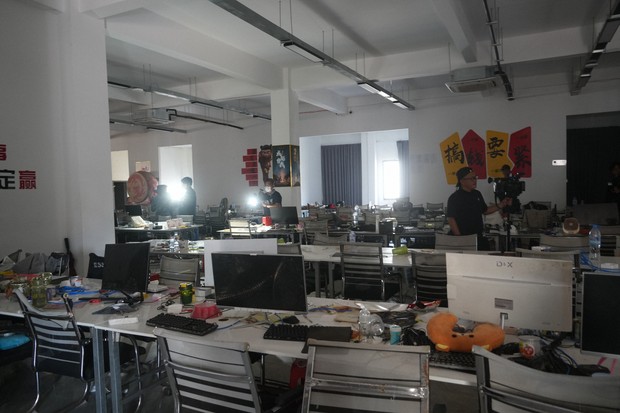
The man does not know where the hideout was. Soon after arriving, he was confined there, and his days of going to a separate room that served as the "workplace" began. He read manuals and practiced scripts to deceive people by impersonating an employee of a major telecommunications company. He was provided with three meals a day, and got up in the morning and slept at night. Although he knew he was leading a life of crime, he later testified in court that "at first, I felt a sense of security working there."
According to his lawyer, the man "had never been good at living in groups." He was mentally unstable and after a little more than 20 days could no longer make the calls. An executive member told him, "Move to another base." "After that I was full of anxiety and could no longer talk with the person I was supposed to deceive," he said. He was moved repeatedly to other locations. Investigative sources say fraud groups with overseas bases often move their hideouts and reassign people to evade crackdowns.
Driven into a corner, the man harmed himself at the fourth base. A few days later, he was ordered to move for a fourth time, almost as if he were being thrown out, and he ran away. With nothing but the clothes he was wearing, he headed to the embassy.
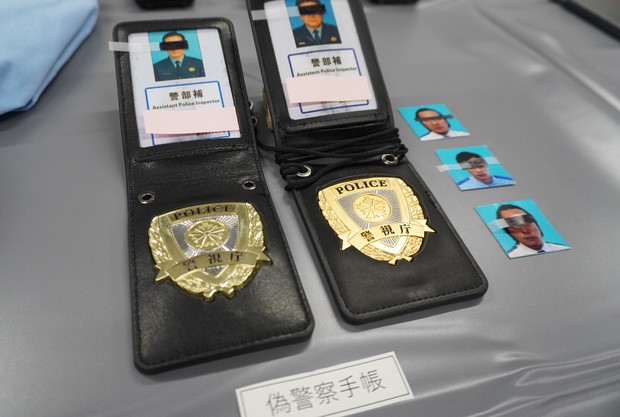
After returning to Japan, he was arrested by the Metropolitan Police Department (MPD) in October 2025 on suspicion of fraud.
He admitted to the charges at his trial which began three months later. When questioned about his family and the victim, he faltered. "I did something irreversible."
When his lawyer asked about his mother, he replied, "I want to turn my life around and try again."
In February, he was sentenced to three years and six months in prison. In the courtroom, his mother leaned forward, holding her hands to her ears. The ruling was later finalized.
False promises and living in an unsafe environment
In the end, the man received nothing for his criminal activities. He had been promised a commission of 6% to 7% of the money he defrauded, but according to an investigator, "in many cases, the funds are never paid." Even if they are paid, if the operation is uncovered while the money is still under the organization's control, nothing remains in hand.
The working conditions are nothing like what you would call decent. Long hours of "work" and "reflection" are repeated under surveillance, and some cannot tolerate the local food.
The reality is that the lowest-ranking among these groups are not even guaranteed their safety.
In Cambodia in 2025, a case came to light in which a South Korean male university student working as a scam caller died after being tortured. Other illicit workers arrested by the MPD have reportedly testified, "We were made to work 14 hours a day," and "I tried to escape during a moment of low supervision, failed and was beaten severely with a stick."
According to Japan's National Police Agency, there were 27,832 cases of special fraud in 2025. By contrast, only 6,575 cases were cracked down on. Investigators are struggling to keep up with the number of cases.
That year, only 54 people were arrested after being taken into custody at overseas fraud bases and transferred to Japan.
(Japanese original by Minori Nagaya, Tokyo City News Department)

Comments
Post a Comment